In this guide
Quick answer: A healthy natural gas furnace flame is steady and mostly blue, sometimes with small orange flecks from dust. A flame that is mostly yellow or orange, lazy, lifting off the burner or rolling out points to poor combustion, which can produce carbon monoxide. Common causes are dirty burners, a blocked air supply or vent, wrong gas pressure, or a cracked heat exchanger. Make sure your CO alarms work, avoid running the furnace hard, and book an inspection promptly. If a CO alarm sounds, get everyone out and call 911. See furnace repair.
Flame color is one of the few safety signs you can check yourself, through the small window in the furnace door. It takes ten seconds and can tell you a lot about how your furnace is burning gas.
What a healthy flame looks like
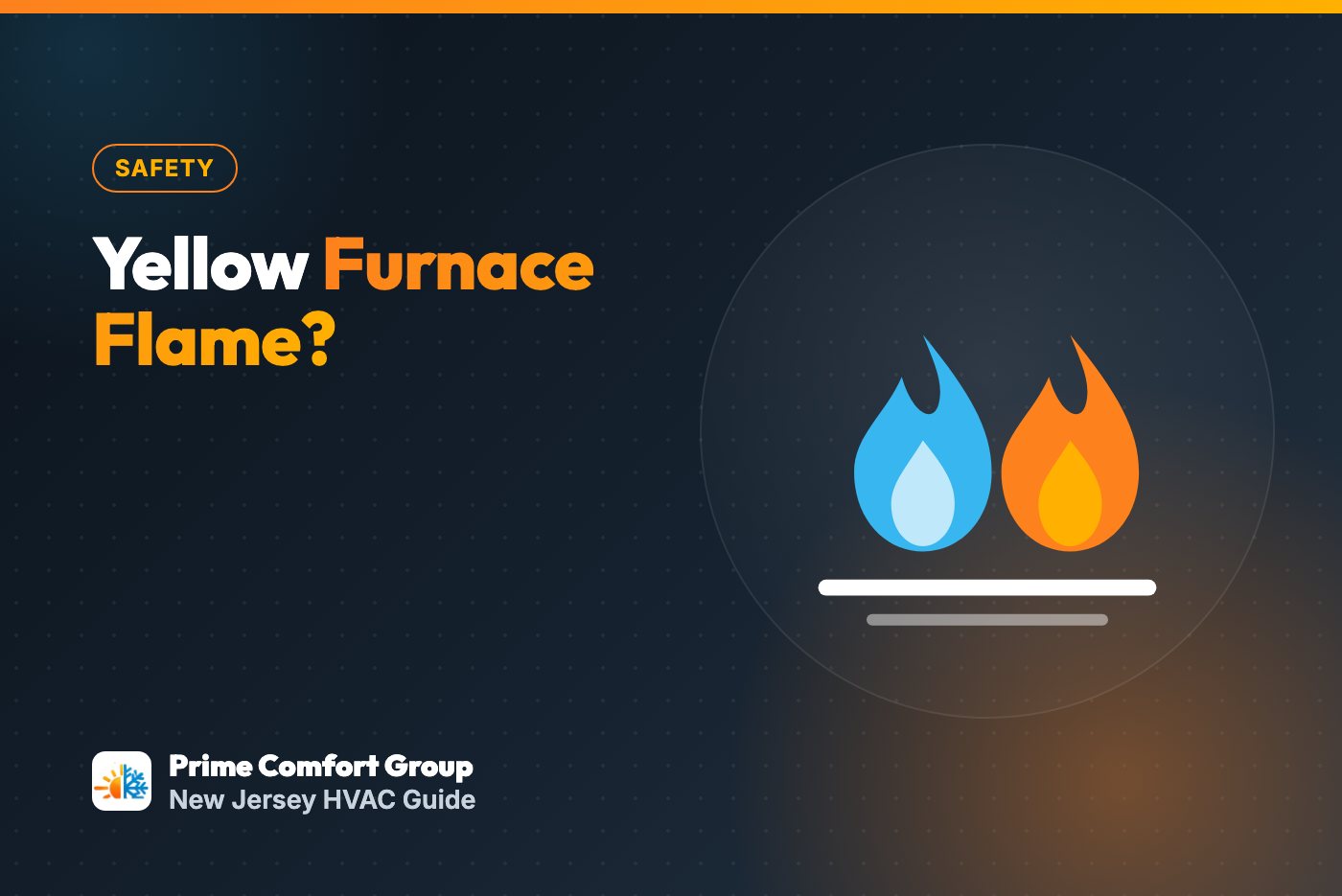
When natural gas burns with the right amount of air, the flame is blue, with a crisp inner cone and a softer outer layer. The flames sit evenly on each burner, at similar heights, and they do not jump or bend when the blower starts. That is called complete combustion: the gas turns mostly into heat, water vapor and carbon dioxide.
A few short orange streaks are usually just dust in the air burning off, especially in the first weeks of the heating season. Older furnaces with a standing pilot have a small pilot flame that should also be mostly blue and wrap around the thermocouple. See furnace pilot light out.
What different flames can mean
| What you see | What it can mean | What to do |
|---|---|---|
| Steady blue, even height | Healthy combustion | Nothing |
| Blue with small orange flecks | Dust burning off | Usually nothing; change the filter |
| Mostly yellow or orange | Incomplete combustion | Check CO alarms; book an inspection |
| Lazy, floating, uneven flames | Not enough air or a venting problem | Book an inspection promptly |
| Flame lifts off the burner | Too much air or wrong gas pressure | Book an inspection promptly |
| Flame bends or dances when the blower starts | Possible cracked heat exchanger | Stop using it; call |
| Flames curling out of the burner area | Flame rollout, blocked flue or heat exchanger | Turn it off and call now |
| Soot or scorch marks | Ongoing poor combustion | Turn it off and call |
Why flames turn yellow
Dirty or rusty burners
Dust, rust flakes, spider webs and debris partly block the burner ports and air openings, so the gas does not mix with enough air. This is common in basements and garages and in furnaces that have gone a few years without a tune-up.
Not enough combustion air
Furnaces need air to burn gas. A furnace closed into a small closet, a basement sealed up during renovation, or a blocked intake pipe on a high-efficiency furnace can starve the flame.
Venting problems
A blocked, disconnected or poorly sloped flue, or a chimney with debris or a collapsed liner, can let combustion gases linger around the burners. That is a carbon monoxide risk.
Gas pressure and burner adjustment
Incorrect gas pressure, or a burner air shutter out of adjustment, changes the flame. Pressure is set with a gauge, not by eye, and is part of a proper tune-up.
Cracked heat exchanger
A crack lets air from the blower push into the combustion chamber. The classic sign is a flame that changes, flickers or bends when the blower starts. See cracked heat exchanger signs.
Why it matters: carbon monoxide
Incomplete combustion can produce carbon monoxide (CO), a gas you cannot see or smell. Early symptoms are easy to mistake for flu: headaches, dizziness, nausea and tiredness that improve when you leave the house. A yellow flame does not always mean dangerous CO levels, but it is a reason to check.
- Have working CO alarms on every level of the home and near sleeping areas
- Test them monthly and replace them as the maker recommends
- If an alarm sounds, get everyone out, call 911, and do not go back in until it is cleared
See carbon monoxide and furnace safety and CO detector beeping.
Case study: a carbon monoxide call in Matawan
This is a real job from our team. A family in Matawan, with young children at home, called because their carbon monoxide detector was going off. Steve, our Director of Operations, went out the same day to check it. Testing showed a carbon monoxide reading of about 600 ppm, a serious combustion problem.
The family needed heat back quickly and safely. Within three hours, the new equipment was delivered, and our team was installing two new systems, with our installer Eddie assembling the new furnace, air conditioner and coil in the attic.
What this job shows:
- CO alarms work. The detector was the first warning.
- Same day matters. With children in the home, waiting was not an option.
- Testing beats guessing. A combustion and CO test, not the age of the furnace, decided the next step.
Propane and oil burners are different
Propane flames should also be mostly blue, and the same warning signs apply. Oil burners are different: an oil flame is naturally yellow-orange, so color alone tells you less. Signs of trouble on an oil furnace or boiler are soot around the burner or flue, a smoky or oily smell, rumbling at start-up, or black smoke from the chimney. Oil equipment needs a yearly cleaning and combustion test. See gas vs oil furnace.
What to do if your flame is yellow
- Check your CO alarms right away. Test them and make sure they have power.
- Look for other signs: soot, scorch marks, a sooty smell, condensation on windows near the furnace, or family members feeling unwell at home.
- Change the filter and make sure nothing is stored around the furnace or blocking air vents to the room.
- Check outdoor vent pipes on high-efficiency furnaces for snow, ice, leaves or nests.
- Book an inspection promptly. If you see rollout, soot, scorch marks or the flame bending when the blower starts, turn the furnace off at the thermostat and call our 24/7 line.
Do not adjust burners, air shutters or gas pressure yourself. Those settings need a gauge and a combustion analyzer.
How we inspect and fix it
We clean and inspect the burners and air openings, measure gas pressure and adjust it to the manufacturer's specification, check combustion air, inspect the flue, chimney and vent pipes, look at the heat exchanger where it is visible, watch the flame through a full cycle including blower start, and test for carbon monoxide in the flue and around the furnace. You get a clear explanation and an upfront price before any repair. If the heat exchanger is cracked on an older furnace, replacing the furnace is usually the safer choice. See furnace replacement in New Jersey.
Why this is common in New Jersey
Gas heats 73% of New Jersey homes, 81% in Monmouth County (U.S. Census Bureau, ACS 2020–2024), and 63% of homes statewide were built before 1980. Older furnaces, chimneys shared with water heaters, and basements tightened up by renovation all raise the chance of combustion problems. A yearly tune-up catches most of them early.
Preventing flame and CO problems
- Book a yearly tune-up that cleans burners, measures gas pressure and tests for CO
- Keep the furnace area clear and the burner door in place
- Keep outdoor vent pipes clear
- Change filters on schedule (see how often to change your filter)
- Replace CO alarms on schedule
Our heating tune-up is $89 (terms apply), and the Prime Comfort Club covers one heating and one AC tune-up a year for $19/month (terms apply). New systems qualify for $500 off (terms apply), with financing through Synchrony, subject to credit approval.
Furnace safety checks near you
Our own licensed team inspects and repairs furnaces 24/7 across all 153 towns in Ocean, Monmouth, Burlington and Middlesex counties, including Middletown, Old Bridge, Toms River and Brick. Work is performed under NJ Master HVACR License 19HC00844400.
Yellow flame or a CO alarm? Get out if the alarm sounds and call 911. For a furnace inspection, book online or call (732) 779-7106, 24/7.
Frequently asked questions
What color should a furnace flame be?
A natural gas furnace flame should be steady and mostly blue, often with a lighter blue inner cone. Small, occasional flecks of orange are usually dust burning off.
Is a yellow furnace flame dangerous?
It can be. A mostly yellow or orange flame usually means incomplete combustion, which can produce carbon monoxide. Make sure your CO alarms work and have the furnace inspected promptly. If a CO alarm sounds, get everyone out and call 911.
What causes a yellow flame on a gas furnace?
Common causes are dirty or rusty burners, a blocked air supply, blocked or leaking venting, incorrect gas pressure, a misadjusted burner, or a cracked heat exchanger that disturbs the flame.
Why does my furnace flame flicker or dance?
A flame that flickers, lifts off the burner or bends when the blower starts can mean a draft problem or a cracked heat exchanger. It needs an inspection with a combustion analyzer.
Do you test furnaces for carbon monoxide?
Yes. Every furnace repair and tune-up we perform includes a carbon monoxide check, and we inspect burners, venting and the heat exchanger area. We serve Ocean, Monmouth, Burlington and Middlesex counties 24/7.
Furnace & Heating Repair near you
We provide furnace & heating repair in all 153 towns across Ocean, Monmouth, Burlington and Middlesex counties. Find your area:
Monmouth County (all 53 towns)
Too hot? Too cold? Let’s fix that today.
Book online in about a minute or call us for honest advice and an upfront quote. Same day service across Ocean, Monmouth, Burlington and Middlesex counties.
- $50 off your first repair (new customers, terms apply)
- 24/7 emergency line
- Upfront quotes
- No hidden fees
- Licensed & family owned


Install our app
On your iPhone or iPad, in Safari:
- Tap the Share button ↑︎ at the bottom of the screen
- Scroll down and tap Add to Home Screen
- Tap Add. The app appears on your home screen
Using Chrome on iPhone? Tap the share icon in the address bar, then Add to Home Screen.
On your Android phone, in Chrome:
- Tap the menu ⋮ at the top right
- Tap Install app (or Add to Home screen)
- Tap Install. The app appears on your home screen
No app store, no sign-up needed. Book service, track appointments and see your invoices and receipts.