

In this guide
"Is a tune-up really worth it, or is it just a way to get a technician in the door?" It's a fair question. Unfortunately, some companies do treat tune-ups as a quick look and a sales pitch. A real AC tune-up is hands-on work that improves performance and catches problems early. Here's exactly what should happen, and what we do on every tune-up.
Step 1: Talk to you first
A good tune-up starts with a few questions: Any rooms too warm? Strange noises? Water anywhere? Bills going up? You live with the system every day, and your observations point the technician in the right direction.
Step 2: Check the thermostat
- Confirm it's calling for cooling correctly and the fan settings work.
- Check calibration against an accurate thermometer.
- Check wiring connections and batteries.
- If you have a smart thermostat, make sure it's configured correctly for your system type.
Step 3: Inspect and test electrical components
This is where many summer breakdowns are prevented.
- Capacitors: These help the compressor and fan motors start. They weaken with age and heat, and a failing capacitor is one of the most common heat-wave failures. We test the actual capacitance, not just look at it.
- Contactor: The switch that turns the outdoor unit on. Pitted or burned contacts cause hard starts and failures.
- Wiring and connections: Loose or corroded connections are tightened or flagged. Corrosion is common at the shore.
- Motor amperage: Measuring how much current the motors draw can reveal motors that are struggling.
Step 4: Clean the outdoor coil
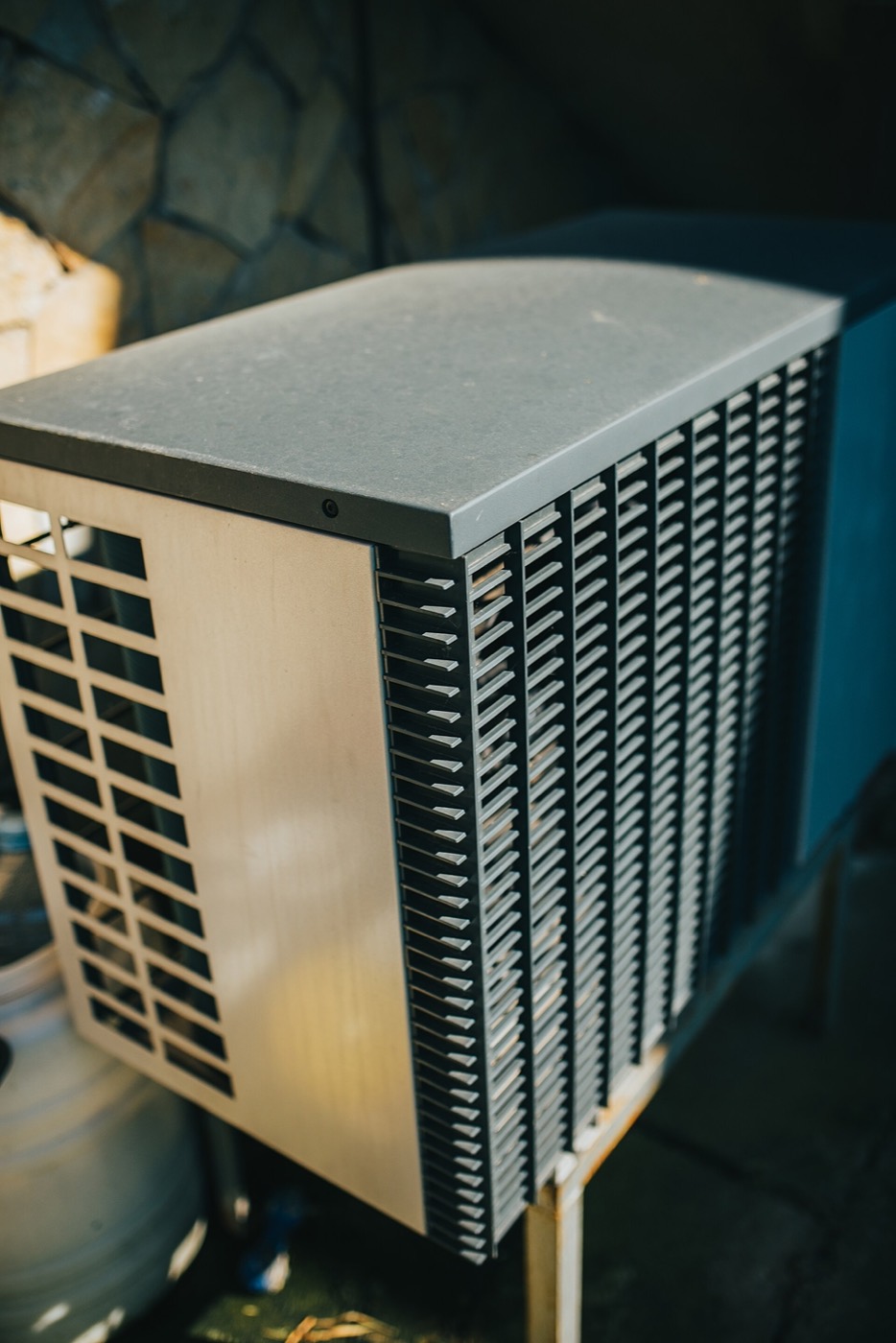
The condenser coil releases the heat removed from your home. Dirt, cottonwood, grass and salt on the coil make the system work harder and run hotter. We clean the coil properly and straighten bent fins where needed. For homes near the ocean, this step matters even more; see salt air and AC corrosion.
Step 5: Check refrigerant pressures and temperatures
We connect gauges or digital probes to measure system pressures and line temperatures, then calculate superheat or subcooling (depending on the system's metering device). This tells us whether the refrigerant charge is correct. An undercharged system usually has a leak; an overcharged system wastes energy and stresses the compressor.
Step 6: Inspect the indoor unit
- Check the blower motor and wheel for dirt and proper operation.
- Inspect the evaporator coil where accessible for dirt or ice.
- Check the air filter, and replace it if you have one on hand.
- Look for signs of water leakage or corrosion.
Step 7: Clear the condensate drain
An AC removes a lot of water from humid Jersey summer air. That water drains through a small line that can clog with algae and sludge. We flush the line, check the pan, and test the safety float switch if there is one. A clogged drain is one of the most common causes of water damage to ceilings and floors from attic units.
Step 8: Measure performance
We measure the temperature of the air going into the system and the air coming out. A healthy system typically shows a temperature drop of roughly 15–20°F across the coil under normal conditions. Outside that range, something needs attention: airflow, charge or coil condition.
Step 9: Report what we found
You get a clear explanation of the system's condition and anything that needs attention, along with an upfront price if a repair is recommended. No work beyond the tune-up happens without your OK. If something's fine, we tell you that too.
How long does it take?
About an hour per system is typical. Very dirty coils, rooftop or attic units, or problems that need diagnosis take longer.
Common problems a tune-up catches
| Found during tune-up | Why it matters |
|---|---|
| Weak capacitor | Common cause of mid-summer failures |
| Dirty outdoor coil | Higher bills, higher pressures, shorter compressor life |
| Clogged condensate drain | Water damage, system shutdowns |
| Low refrigerant charge | Indicates a leak, poor cooling, risk of compressor damage |
| Pitted contactor | Hard starts, failure to start |
| Dirty blower wheel | Reduced airflow, poor cooling and humidity control |
Is it worth it?
Think of a tune-up the way you think of an oil change. It won't make an old system new, but it:
- Keeps efficiency closer to where it should be
- Catches small, inexpensive problems before they become big ones
- Reduces the chance of a breakdown during a heat wave, when everyone needs service at once
- Helps equipment last longer, especially at the shore
- Can be required to keep some manufacturer warranties valid
Our AC tune-up special is $89. If you want both heating and cooling covered, the Prime Comfort Club is $19/month and includes one heating and one AC tune-up each year, plus priority scheduling and 10% off repairs.
Red flags in a "tune-up"
- It takes 15 minutes and nobody touched the electrical components or checked the refrigerant.
- You're handed a list of urgent, expensive repairs with no explanation or evidence.
- The technician won't show you what they found.
We'll always show you what we see and explain it in plain language. Our own licensed team does the work, never subcontractors.
Book your tune-up
Spring is ideal, but it's never too late. Book an AC tune-up in Toms River, Stafford Township, Eatontown, Tinton Falls or anywhere we serve. Tap the WhatsApp button or see our tune-ups and maintenance page. For a full year-round plan, see our seasonal maintenance checklist.
Frequently asked questions
How long does an AC tune-up take?
Typically about an hour for a single system, longer if the coil is very dirty, access is difficult, or the technician finds a problem that needs further diagnosis.
Do I need to be home for an AC tune-up?
Usually yes, because the technician needs access to the thermostat and the indoor unit (furnace or air handler) as well as the outdoor condenser.
Will a tune-up find refrigerant leaks?
A tune-up checks refrigerant pressures and temperatures, which can reveal a low charge that suggests a leak. Pinpointing the exact location of a leak is a separate diagnostic service if one is suspected.
Is an AC tune-up necessary every year?
Annual maintenance is recommended by most equipment manufacturers and is especially valuable near the coast, where salt and humidity accelerate wear. Some warranties also require proof of regular maintenance.
When should I schedule an AC tune-up at the Jersey Shore?
Spring, ideally March to May, before the first heat wave. Homes near the ocean or bay may also benefit from a mid-summer coil cleaning because salt and humidity build up quickly.

Too hot? Too cold? Let’s fix that today.
Message us on WhatsApp and our team will get back to you with honest advice and an upfront quote. Same day service across Ocean, Monmouth and Burlington counties.
- Upfront quotes
- No hidden fees
- Licensed & family owned