
In this guide
Quick answer: Auxiliary (aux) heat turns on automatically when your heat pump needs help, during defrost, on very cold days or for quick warm-ups, and occasional use is normal. Emergency (EM) heat is a manual setting that turns the heat pump off and runs only the backup heat. Use it only if the heat pump has failed, then call for repair, because running backup heat alone costs much more.
If you have a heat pump, you've probably seen "Aux Heat" pop up on your thermostat, or noticed an "Em Heat" or "Emergency Heat" setting and wondered whether you should use it. These two terms confuse a lot of New Jersey homeowners, and misunderstanding them can lead to surprisingly high electric bills. Here's what they mean.
First, how your heat pump heats
A heat pump moves heat from the outdoor air into your home. It's very efficient, but as temperatures drop, its heating capacity drops too. That's why most heat pump systems have a backup heat source:
- Electric resistance heat strips in the air handler (most common in all-electric systems), or
- A gas furnace in a dual-fuel system.
"Aux" and "Emergency" heat are two different ways that backup heat gets used.
What auxiliary (aux) heat is
Auxiliary heat turns on automatically when the heat pump needs help. Common times:
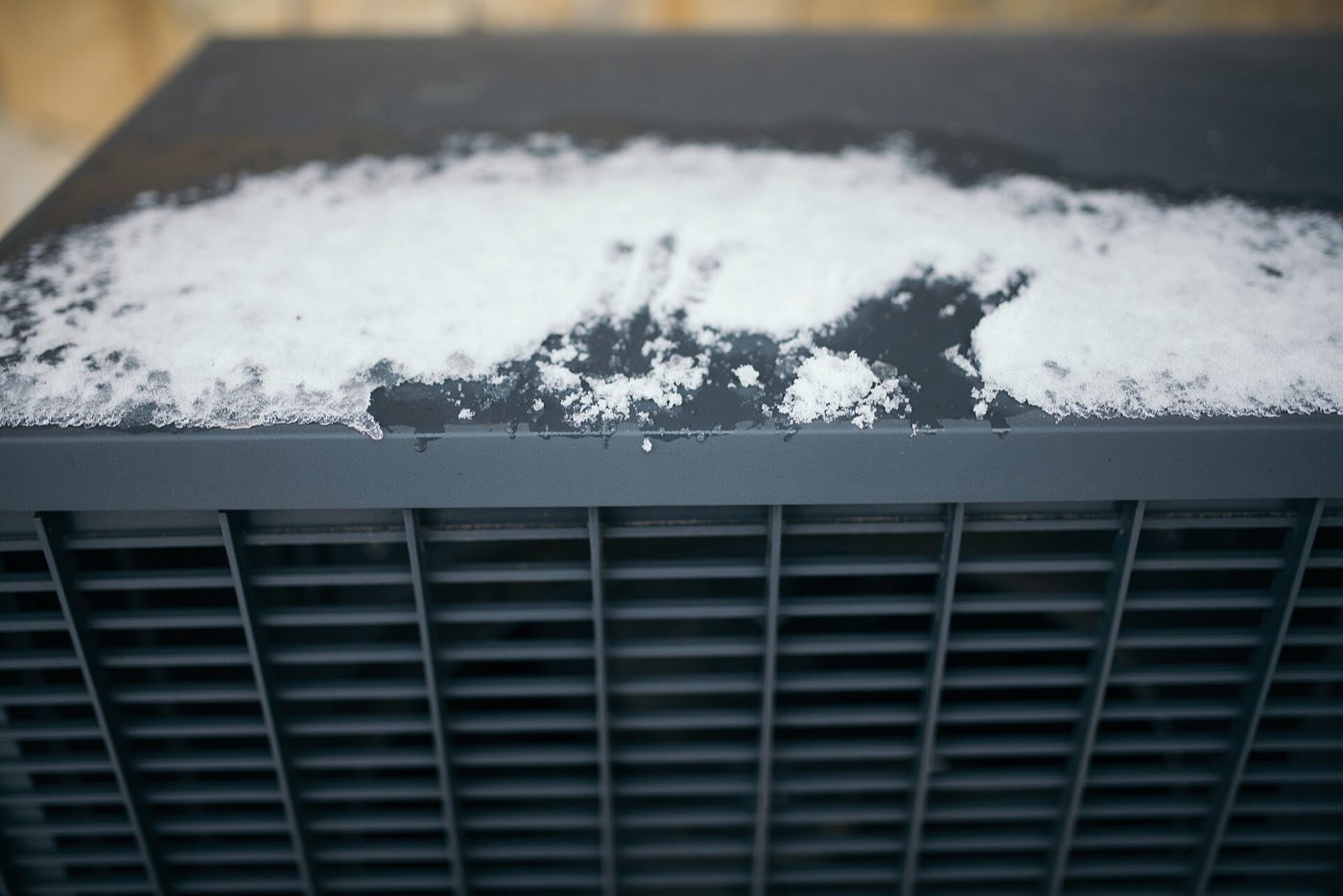
- Defrost cycles: in cold, damp weather, the outdoor coil frosts up. The heat pump briefly reverses to melt it, and aux heat keeps warm air coming inside. Very common near the coast.
- Very cold weather: when the heat pump alone can't keep up.
- Fast recovery: when you raise the thermostat several degrees, the system may call for aux heat to catch up quickly.
Seeing "Aux Heat" occasionally is normal.
What emergency heat is
Emergency heat is a manual setting. When you switch to "Em Heat," the thermostat turns the heat pump off completely and runs only the backup heat. It's meant for when the heat pump itself isn't working: the outdoor unit is damaged, frozen solid or not running.
Side by side
| Auxiliary heat | Emergency heat | |
|---|---|---|
| How it turns on | Automatically | You select it manually |
| Heat pump running? | Yes, aux supplements it | No, heat pump is off |
| When it's used | Defrost, very cold days, fast recovery | Heat pump has failed |
| Cost to run | Higher while active | Highest (backup only, continuously) |
| Normal? | Yes, occasionally | Only as a temporary measure |
Why backup heat costs more
Electric resistance strips turn electricity directly into heat, one unit of heat for each unit of electricity. A heat pump moving heat can deliver two to three or more units of heat per unit of electricity in moderate weather. So when backup strips run a lot, bills climb fast.
Signs something is wrong
- Aux heat runs constantly, even in mild weather.
- Ice builds up and stays on the outdoor unit.
- The outdoor fan isn't running, or the unit is silent while aux heat is on.
- The house won't warm up even with aux heat.
- Your winter electric bill jumps sharply.
These can point to defrost control problems, low refrigerant, a failed reversing valve or outdoor fan motor, airflow restrictions, or a thermostat configuration issue. Call for heating repair.
How to use less aux heat
- Use small thermostat setbacks (2–3°F) or none. Big setbacks trigger aux heat during recovery. See best thermostat settings.
- Use a heat-pump-compatible smart thermostat with smart recovery that warms gradually.
- Keep the outdoor unit clear of snow, ice and leaves, with at least a foot of clearance.
- Change filters regularly; restricted airflow makes the system work harder.
- Get a fall tune-up to check refrigerant charge, defrost controls and auxiliary heat settings.
- Consider dual fuel if you have gas available: a furnace handles the coldest days more economically in some homes. See heat pump vs. furnace.
Using emergency heat the right way
If your heat pump stops working on a cold night:
- Switch the thermostat to Emergency Heat to keep the house warm.
- Call for service right away.
- Switch back to normal heat once the heat pump is repaired.
Don't leave it on emergency heat all winter "to be safe." It can cost far more than normal operation.
Dual-fuel systems: how backup heat works with a furnace
In a dual-fuel setup, the backup heat is a gas furnace instead of electric strips. The thermostat or control board switches from the heat pump to the furnace below a set outdoor temperature (the "balance point") or when the furnace is more economical to run. In these systems, "aux heat" on the thermostat usually means the furnace is running. The same rules apply: occasional furnace operation on cold days is normal, but if the furnace runs all the time in mild weather, the heat pump may need service, or the switchover temperature may need adjusting.
Setting the right switchover point depends on your heat pump's capacity, your home's heating needs and local energy prices. It's something we review during installation and fall tune-ups so the system uses the most economical heat source for the conditions.
Heat pump help near you
Inland towns like Lakewood, Jackson, Stafford Township and Medford see the coldest nights in our area, which is when heat pumps work hardest. We repair and maintain heat pumps across Ocean, Monmouth and Burlington counties with same day service. Message us on WhatsApp or call for an upfront price, or read more about heat pumps in New Jersey winters.
Frequently asked questions
What is the difference between emergency heat and auxiliary heat?
Auxiliary heat turns on automatically to help the heat pump during defrost, very cold weather or quick temperature recovery. Emergency heat is a manual mode that turns the heat pump off completely and runs only the backup heat source.
Is it normal for aux heat to come on?
Yes, occasionally. Aux heat commonly runs during defrost cycles, on very cold days, and when you raise the thermostat several degrees. If it runs constantly in mild weather, the heat pump may need service.
When should I use emergency heat?
Only when the heat pump isn't working, for example if the outdoor unit is damaged, iced over or not running. Switch to emergency heat to stay warm and call for repair, since running only backup heat can be expensive.
Why is my electric bill high with a heat pump in winter?
Common causes are auxiliary or emergency heat running too much, large thermostat setbacks that trigger aux heat during recovery, a heat pump that needs service, or a system that is undersized for cold weather.
How can I reduce auxiliary heat use?
Use small thermostat setbacks or none, choose a heat-pump-compatible smart thermostat with smart recovery, keep the outdoor unit clear of snow and ice, change filters, and schedule a fall tune-up.
Do you repair heat pumps?
Yes. Prime Comfort Group repairs heat pumps, including defrost problems, reversing valve issues and auxiliary heat that runs too often, with same day service across Ocean, Monmouth and Burlington counties.
Too hot? Too cold? Let’s fix that today.
Message us on WhatsApp and our team will get back to you with honest advice and an upfront quote. Same day service across Ocean, Monmouth and Burlington counties.
- Upfront quotes
- No hidden fees
- Licensed & family owned
