
In this guide
New Jersey homeowners know the feeling: a July electric bill after a week of 90-degree humidity, or a January gas bill after a cold snap. Heating and cooling are usually the biggest piece of a home's energy use, which means they're also the biggest opportunity to save. Here are twelve ways to lower those bills, starting with the free ones.
Free habits
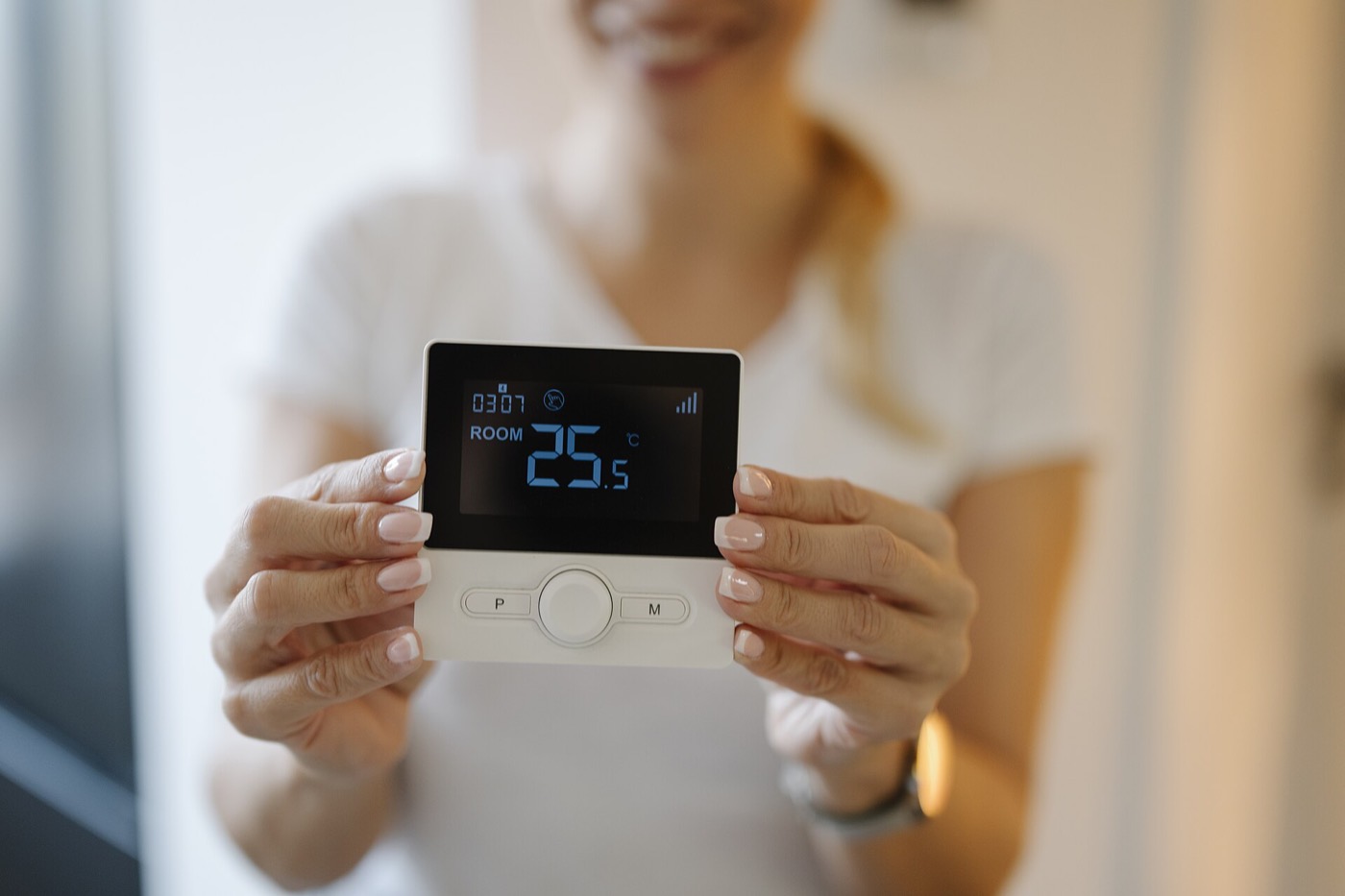
1. Use smart thermostat settings
The U.S. Department of Energy estimates you can save up to about 10% a year on heating and cooling by setting your thermostat back 7–10°F from its normal setting for 8 hours a day, such as while you're at work or asleep. Good starting points:
- Winter: around 68°F while you're home and awake, lower while asleep or away.
- Summer: around 78°F while you're home, higher while away.
If you have a heat pump, use smaller setbacks so the system doesn't call for expensive backup heat when recovering. Our thermostat settings guide has more detail.
2. Set the fan to "Auto"
Running the blower continuously ("On") uses electricity and, in summer, puts moisture back into the house. "Auto" runs the fan only when heating or cooling.
3. Work with the sun
In summer, close blinds and curtains on south- and west-facing windows during the afternoon. In winter, open them on sunny days to let free heat in, and close them at night to hold heat.
4. Keep vents and returns clear
Furniture, rugs and drapes over vents and return grilles restrict airflow and make the system work harder. Don't close lots of vents to "save energy." It raises duct pressure and can reduce efficiency.
Low-cost fixes
5. Change your air filter on schedule
A clogged filter forces the blower to work harder and reduces heating and cooling capacity. Check monthly and change 1-inch filters every 1–3 months. See our air filter guide.
6. Seal air leaks
Weatherstrip doors, caulk gaps around windows, and seal openings where pipes and wires enter the house. Don't forget the attic hatch, which is often a big leak. Older shore cottages and expanded homes often have many small gaps that add up.
7. Use ceiling fans wisely
In summer, run ceiling fans counterclockwise so they push air down, letting you raise the thermostat a couple of degrees with the same comfort. Turn them off in empty rooms.
8. Keep the outdoor unit clean
A dirty outdoor coil can't release heat efficiently, which drives up energy use. Gently rinse it with a hose (power off) and keep plants and debris back. Near the coast, regular rinsing also fights salt corrosion; see salt air and AC corrosion.
Professional improvements
9. Get annual maintenance
A tune-up checks refrigerant charge, cleans coils, tests electrical parts and verifies airflow, all of which affect efficiency. A system with the wrong refrigerant charge or a dirty coil can use noticeably more energy while delivering less comfort. Our $89 tune-up and the Prime Comfort Club ($19/month for a heating and an AC tune-up each year) keep it simple. See what happens during an AC tune-up.
10. Seal and insulate ductwork
ENERGY STAR estimates that typical duct systems lose about 20 to 30 percent of the air moving through them to leaks, holes and poorly connected ducts. Ducts in attics, garages and crawl spaces are the worst offenders, since leaked air goes straight outside or into unconditioned space. Sealing joints with mastic or approved foil tape and insulating ducts in unconditioned spaces is one of the best-value upgrades for many homes.
11. Add insulation where it counts
Attic insulation is often the most cost-effective place to start. Many older homes in our area have far less than current recommendations. Better insulation reduces how hard your system has to work in both seasons, and may mean a smaller, less expensive system when you replace.
12. Upgrade to efficient equipment when it's time
If your system is 15+ years old, uses R-22 refrigerant, or needs frequent repairs, a new high-efficiency system can significantly reduce energy use. Today's equipment is rated in SEER2 (cooling), HSPF2 (heat pump heating) and AFUE (furnaces). Our efficiency ratings guide explains the numbers. Homes heating with oil, propane or electric baseboard often see the biggest savings from a cold-climate heat pump.
Incentives that can help
- NJ Clean Energy Program and utility programs: New Jersey utilities have offered rebates and financing for qualifying high-efficiency HVAC equipment, home energy assessments, and weatherization.
- Comfort Partners: a New Jersey program offering free energy-efficiency upgrades to income-eligible households.
- Prime Comfort Group offers: $500 off a new heating or cooling system, $50 off a first repair for new customers, and an $89 tune-up special.
Incentive programs change frequently, so check current offerings with your utility or ask us when we quote your project.
Quick-reference savings table
| Action | Cost | Effort |
|---|---|---|
| Thermostat setbacks | Free | Easy |
| Fan on Auto | Free | Easy |
| Blinds and curtains | Free | Easy |
| Filter changes | Low | Easy |
| Air sealing | Low | Moderate DIY |
| Annual tune-up | $89, or Club membership | Book it |
| Duct sealing and insulation | Moderate | Professional |
| Attic insulation | Moderate | Professional |
| High-efficiency system | Higher upfront | Professional |
Start with an honest assessment
Not sure where your home is losing the most energy? We'll check your system's efficiency, ductwork and settings during a visit, and tell you which improvements are worth it and which aren't. Message us on WhatsApp from Howell, Wall Township, Marlton, Willingboro, Jackson or anywhere in our service area.
Frequently asked questions
What uses the most energy in a New Jersey home?
Heating and cooling typically account for the largest share of a home's energy use, followed by water heating. That's why thermostat habits, air sealing, ductwork and HVAC efficiency have such a big impact on bills.
Does turning the thermostat down at night save money?
Yes. The U.S. Department of Energy estimates you can save up to about 10% a year on heating and cooling by setting the thermostat back 7–10°F from its normal setting for 8 hours a day. Heat pump owners should use moderate setbacks to avoid triggering backup heat.
Are there rebates for new HVAC systems in New Jersey?
New Jersey utilities and the NJ Clean Energy Program have offered incentives for qualifying high-efficiency equipment, and income-eligible households may qualify for programs like Comfort Partners. Programs change, so check current offerings or ask your contractor.
Do ceiling fans help lower AC bills?
Ceiling fans make you feel cooler by moving air across your skin, so you can often raise the thermostat a few degrees without losing comfort. Turn them off when you leave the room, since they cool people, not spaces.
What thermostat setting saves the most money in winter?
About 68°F while you're home and awake, with a lower setting while asleep or away, is a common energy-saving approach. The U.S. Department of Energy estimates setbacks of 7–10°F for 8 hours a day can save up to about 10% a year.
Too hot? Too cold? Let’s fix that today.
Message us on WhatsApp and our team will get back to you with honest advice and an upfront quote. Same day service across Ocean, Monmouth and Burlington counties.
- Upfront quotes
- No hidden fees
- Licensed & family owned