
In this guide
Quick answer: Most thermostat problems come down to dead batteries, the wrong mode or set point, schedules overriding your settings, a tripped breaker, an open furnace door switch, a tripped condensate float switch, or a smart thermostat without steady power (no C-wire). Work through those first. If the thermostat calls for heat or cooling and nothing happens, the issue is likely the HVAC equipment or wiring, which a technician can test.
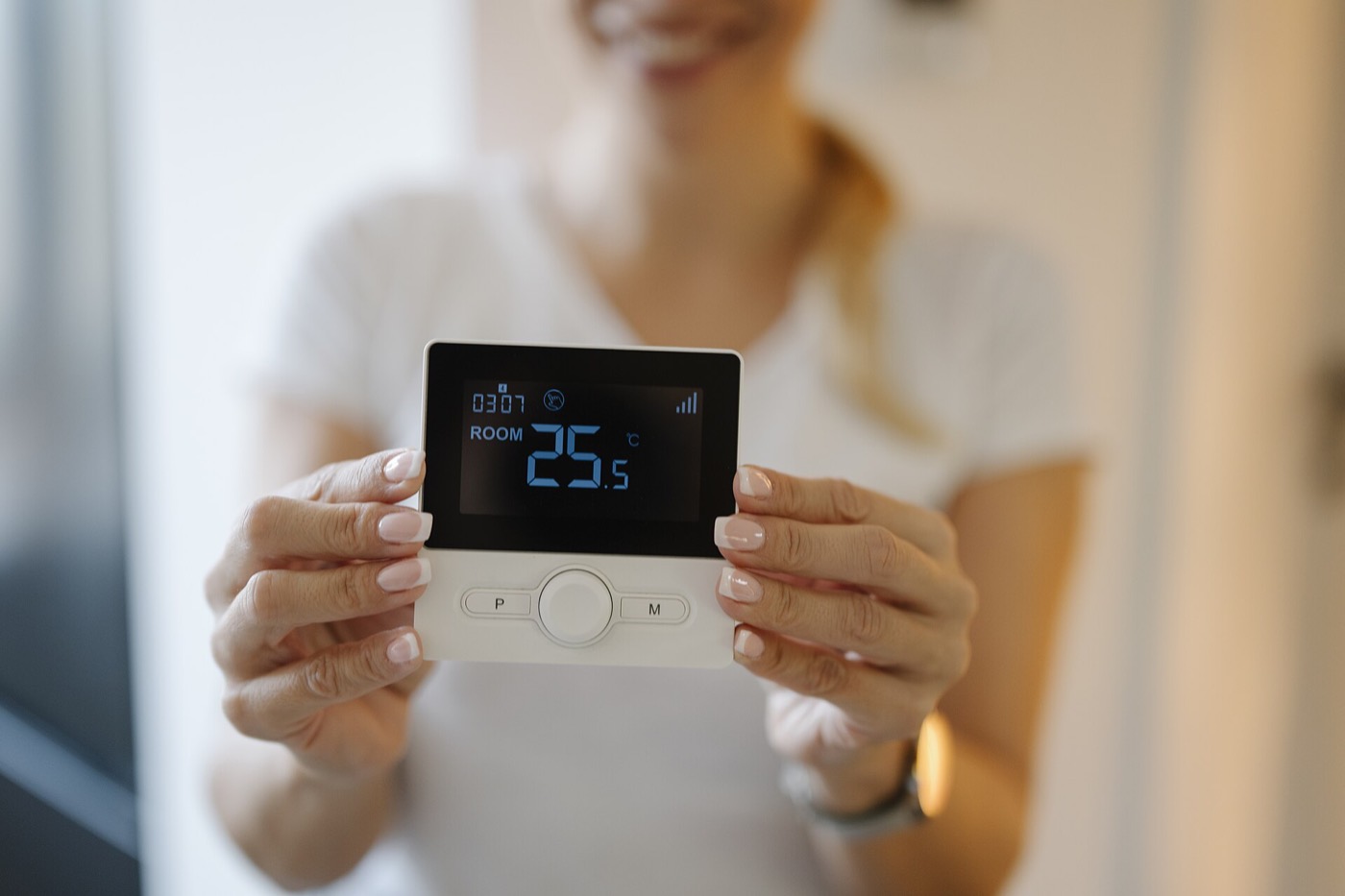
When the house is too hot or too cold, the thermostat is the first place to look, and sometimes the only place you need to look. Many "my HVAC is broken" calls turn out to be a thermostat setting, dead batteries or a tripped safety switch. Here are ten checks to run before you call.
1. Check the batteries
A dim or blank screen often just means dead batteries. Many thermostats keep running the system on low batteries until they suddenly don't. Replace them once a year.
2. Confirm the mode and set point
- Cool mode with the set point a few degrees below room temperature, or
- Heat mode with the set point a few degrees above room temperature.
It sounds obvious, but seasonal switches and accidental button presses are common.
3. Look for schedules, holds and "away" modes
Programmable and smart thermostats can override what you set manually. Check for schedules, vacation or eco modes, and geofencing that thinks no one is home.
4. Set the fan to "Auto"
With the fan on On, air blows constantly even when the system isn't heating or cooling, which can feel like the system isn't working. Auto runs the fan only during cycles.
5. Check the breakers and switches
- Breakers for the furnace/air handler and the outdoor unit.
- The furnace power switch (looks like a light switch, often at the top of basement stairs).
- The outdoor disconnect box beside the condenser.
If a breaker trips again right away, leave it off and call for service.
6. Make sure the furnace door is closed
A safety switch cuts power if the blower compartment door isn't seated, which can also leave the thermostat dead.
7. Check for a tripped float switch
Many systems have a float switch that shuts everything off if the condensate drain backs up. If you see water in the pan or around the unit, that's likely it. See AC leaking water inside.
8. Smart thermostat power (C-wire)
Smart thermostats need steady power. Without a C (common) wire, some "steal" power and can drop out, reboot or fail to run the system. Symptoms: random restarts, blank screen, Wi-Fi drops. A technician can add a wire or install a compatible adapter.
9. Check compatibility and configuration
Heat pumps, dual-fuel systems and two-stage equipment need the thermostat configured correctly. A heat pump wired like a furnace may heat when you want cooling, or run expensive auxiliary heat. Learn about emergency vs. auxiliary heat.
10. Check location and calibration
A thermostat in direct sun, near a lamp or TV, above a supply vent, in a drafty hallway or on an exterior wall can read wrong. Compare it to a separate thermometer. If it's off by more than a degree or two, or the location is poor, consider relocating it or adding remote sensors.
Signs the problem is the HVAC system, not the thermostat
- The display works and calls for heat or cooling, but the furnace or outdoor unit doesn't start.
- The outdoor unit hums but the fan doesn't spin. See AC and furnace noises.
- The furnace starts but blows cold air. See furnace blowing cold air.
- Ice on refrigerant lines. See why is my AC freezing up.
Smart thermostat tips for New Jersey homes
- Use moderate setbacks for energy savings. See best thermostat settings.
- For heat pumps, use small setbacks and "smart recovery" to avoid auxiliary heat.
- Owners of shore houses and rentals can use temperature limits and alerts. See shore house HVAC tips.
Upgrading to a smart thermostat: what to know
A smart thermostat can save energy and add convenience, but only if it matches your system:
- System type: single-stage, two-stage or variable-speed equipment; heat pump or furnace; dual fuel. The thermostat has to support it.
- Wiring: many smart thermostats need a C-wire for reliable power.
- Remote sensors: useful for homes with hot upstairs bedrooms or a thermostat in a poor location.
- Features worth having: schedules, geofencing, humidity readings, maintenance reminders and alerts for extreme temperatures, which are especially useful for shore houses and rentals.
- Heat pump support: look for smart recovery that avoids unnecessary auxiliary heat.
We can recommend, install and configure a thermostat that fits your system as part of a service visit or tune-up, so you get the savings without the headaches.
Still not working?
If you've run through these checks and the system still won't respond, it's time for a technician. We'll test the thermostat, wiring and controls and fix the real problem with upfront pricing. Serving Toms River, Berkeley Township, Manchester, Mount Laurel and all of Ocean, Monmouth and Burlington counties. Message us on WhatsApp or call for same day heating or AC repair.
Frequently asked questions
Why is my thermostat screen blank?
Common causes are dead batteries, a tripped breaker or blown fuse on the HVAC system, an open furnace door safety switch, a tripped condensate float switch, or, for smart thermostats, insufficient power from a missing C-wire.
Why won't my AC turn on when the thermostat calls for cooling?
Check that the thermostat is set to Cool and below room temperature, the breakers for both indoor and outdoor units are on, the outdoor disconnect is on, and the filter isn't clogged. A tripped float switch from a clogged drain can also stop the system.
How do I know if my thermostat is broken?
If the display works, settings are correct and the HVAC system has power, but nothing responds when the thermostat calls for heat or cooling, the thermostat or its wiring may be faulty. A technician can test the thermostat and control circuit.
What is a C-wire and do I need one?
The C (common) wire provides continuous 24-volt power to a thermostat. Many smart thermostats need it to work reliably. If your system doesn't have one, options include running a new wire or using an adapter approved by the thermostat maker.
Can a thermostat be in the wrong location?
Yes. Direct sunlight, nearby lamps, kitchens, supply vents, drafty doors and exterior walls can all make a thermostat read wrong, causing short cycling or uncomfortable rooms. Relocating it or adding remote sensors can help.
Do you install and set up smart thermostats?
Yes. Prime Comfort Group can check compatibility, install and configure a smart thermostat as part of a service visit or tune-up anywhere in Ocean, Monmouth and Burlington counties.
Too hot? Too cold? Let’s fix that today.
Message us on WhatsApp and our team will get back to you with honest advice and an upfront quote. Same day service across Ocean, Monmouth and Burlington counties.
- Upfront quotes
- No hidden fees
- Licensed & family owned